
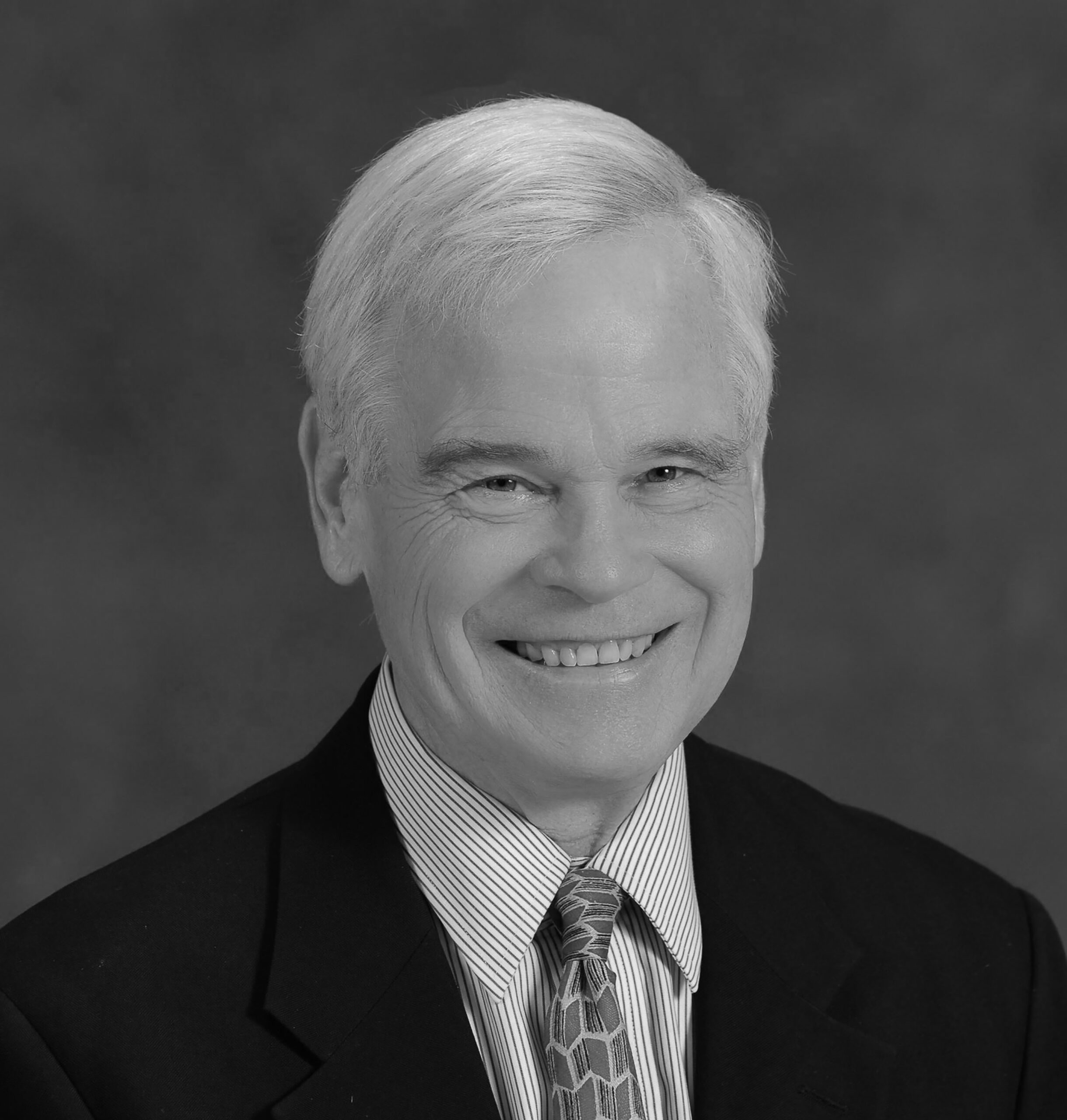
Though David Grier Martin, Jr.—known to all as D.G.—was born in Atlanta on May 24, 1940, and was a childhood resident of Bristol, TN, he grew up from age ten in Davidson and was a fervent North Carolinian, becoming one of the best friends to, and most effective advocates for, the state’s many writers and its remarkable literary tradition.
He graduated from North Mecklenburg High School in 1958 and four years later with honors from Davidson College, where his father served as president from 1958 to 1968. As Martin would be first to tell, he played basketball for the Davidson Wildcats under Coach Lefty Driesell and captained Lefty’s first-ever winning college basketball team. To this day the Wildcat basketball team annually presents the “D.G. Martin Hustle Award” to the player who best epitomizes Martin’s tenacious style of play.
Martin was a proud Davidson alumnus, a devout Presbyterian, a Green Beret with the Army’s Special Forces, a lawyer, an author, a newspaper columnist, a radio and television personality, and a public servant. Nothing on his resume, though, captured the power of his smile, which attracted friends of all ages and circumstances. He made friends everywhere he went, from the roadside restaurants he wrote a book about; to Sutton’s Drugstore on Chapel Hill’s Franklin Street, where he was a regular; to libraries, bookstores, and civic clubs across the state. Martin was a lifelong learner with an insatiable curiosity and a teacher too, always happy to share what he knew.
He met his wife, Harriet Wall of Conway, SC, on a blind date in 1963 while in the Army. They were married in 1966 after his first year at Yale Law School. After he completed his law degree, they moved to Charlotte, where Martin practiced law for 20 years with the firm of Kennedy, Covington, Lobdell, and Hickman.
In Charlotte, he and his family were members of Seigle Avenue Presbyterian Church, a small, inner-city church where he served as an Elder and Sunday school teacher. He served as moderator of the Mecklenburg Presbytery and the Presbyterian Synod of the Mid-Atlantic.
Martin, a steadfast Democrat, ran for the U.S. House of Representatives in a staunchly Republican district based in Charlotte. On his first attempt in 1984, he lost by a mere 327 votes (0.2%). Another attempt in 1986 was also unsuccessful. Despite losing these elections, he won the lasting gift of meaningful friendships across the state.
In 1988, Martin was recruited to the University of North Carolina System as Secretary and later moved to the position of Vice President for Public Affairs. There he built relationships across both sides of the aisle. His knowledge of the state and the university system, his intellect, his integrity, and his genuine relationships made him an ideal representative for the university system at the legislature. He gained the respect and admiration of all he encountered, no matter their views on political issues.
After retiring from the University in 1997, Martin ran for the Democratic nomination for the U.S. Senate, strengthening his already deep ties with people throughout the state. Though not elected, he embodied a form of principled, thoughtful leadership that was both heartening and inspiring.
Martin served six-month appointments as interim vice chancellor at both UNC–Pembroke and North Carolina Central University. He later led the North Carolina Clean Water Management Trust Fund, the Trust for Public Land’s North Carolina office, and the Triangle Land Conservancy, and also served for two years as President of the William R. Kenan Funds.
Throughout this public service he hosted close to 450 episodes of North Carolina Bookwatch on UNC-TV, each one featuring a friendly but in-depth interview with a North Carolina author about their latest book. Unlike many interviewers who rely on notes prepared by a producer, Martin read several times, cover to cover, each book he discussed. Instead of prepared questions, Martin came to each interview with a deep and wide-ranging curiosity and a boundless love for the written word.
Martin also wrote a weekly newspaper column called “One on One” that ran in many papers across the state; recorded a WCHL radio interview program called Who’s Talking; and wrote two editions of the UNC Press book Roadside Eateries, about places in North Carolina with good food and low prices run by likeable Tar Heels. For his service to the state, he became the 53rd recipient of the annual North Caroliniana Society Award.
See a list of D. G. Martin’s books.